
Air Source Heat Pumps
Say goodbye to heating bills

Heat from the air, ground & water
Eco friendly saving on fuel bills

Heating Systems
Solar thermal heating
Heating Services
Because we just love
copper pipes
Monmouthshire | Gloucestershire | Herefordshire | Worcestershire | South East Wales

Off-Grid Heating Ltd is a registered supplier
and installer for the UK government's Boiler Upgrade Scheme
Property owners can apply for a grant to cover part of the cost of replacing fossil fuel heating systems (oil, gas or electric) with an air, water or ground source heat pump.
As of 2023 the grants currently available are:
£7,500 towards an air source heat pump
£7,500 towards a ground source heat pump (including water source heat pumps and those on shared ground loops)
£5,000 towards a biomass boiler
Before you call us find out if you’re eligible for the grant by clicking on the link below:


Air source heat pumps draw energy from the outside air to heat your home and hot water.
Air source heat pumps are a highly cost effective and eco-responsible way to heat your property. During the colder months air source heat pumps are still completely effective, even when the outside air temperature drops as low as -15°C.

A 14kw air source heat pump installation by Off-Grid Heating Ltd. May 2023.
Photo Credit: Stuart Adams
Government Grants ARE available
Eligible home owners can claim a £7,000 grant to help with the installation and purchasing costs of air source heat pumps in England and Wales.
How do air source heat pumps work?
Put simply, heat from the outside air is absorbed by the air source heat pump and converted into fluid. This fluid passes through a compressor which increases the temperature and transfers that higher temperature heat to the heating and hot water system circuits in the house. There are two main types of air source heat pump: air-to-water and air-to-air. The system you choose will determine the type of heat distribution system you need.
Is air source heat right for you?
Providing your property is energy efficient and well insulated (a pre-requisite) this form of heating can be 400% more efficient, i.e. 1kw input = 4 kw heat output.
The equipment is quite expensive, but the prices have been coming down due to their popularity. You may need some changes to your pipework and radiators too, but we will tell you exactly what's needed on our free first site visit.
The great thing is that you will nolonger be purchasing fuel from any energy suppliers. You will need sufficient space to house the large tanks required.
Government Grants ARE available
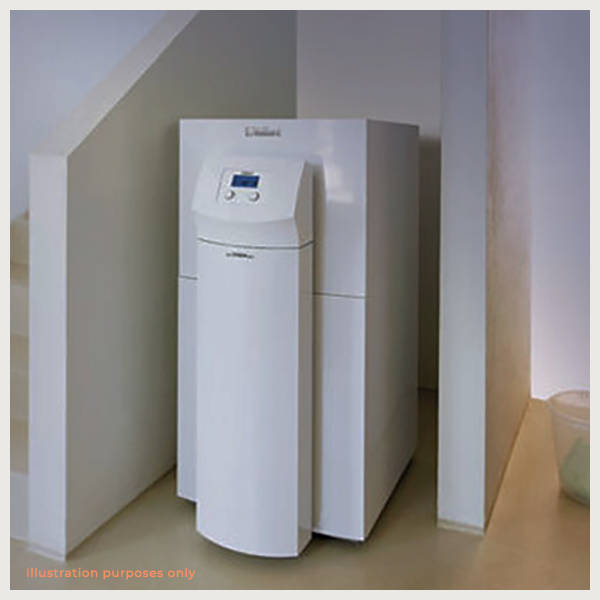
Eligible home owners can claim a £7,000 grant to help with the installation and purchasing costs of ground source heat pumps in England and Wales.
Ground source heat pumps use pipes that are buried in the land to extract heat from the ground.
This naturally sourced heat can then be used to heat radiators, underfloor heating or warm air heating systems as well as hot water in your property.
How do they work?
Heat from the ground is absorbed into a fluid and then passes through a heat exchanger into the heat pump. The ground stays at a fairly constant temperature under the surface, so the heat pump can be used throughout the year. Depending on what fuel source you are replacing ground source heat pumps can significantly lower the carbon footprint of your property as well as ongoing heating costs.
There is no requirement for purchasing fuel from energy suppliers.
Water source heat pumps are often more efficient than ground and air source heating.
This is because heat transfers more efficiently through water than it does through air, and water temperatures are generally more stable.

Government Grants ARE available
Eligible home owners can claim a £7,000 grant to help with the installation and purchasing costs of water source heat pumps England and Wales.
How do they work?
Water source heat pumps extract heat from a nearby water source and then convert that water into energy to provide heat. A series of submerged pipes are used which contain a fluid to absorb heat from a large pond, private lake, river or a bore-hole. This is then converted into useful heat for space heating and hot water, through compressing the working fluid so it can give the heat off at a higher temperature.
Considerations
Water source heat pumps work best when connected to underfloor heating and larger radiators. This ensures that the property benefits from optimum potential performance.
A substantial nearby water source is essential. A reasonably large space is required for the system’s compressor and, because it emits a low humming noise, should be located away from the main living area.
To gain the maximum heat and financial benefit from a water source heat pump, your property must be well-insulated.
Planning permission may be required but if the water supply is within the land boundaries this usually isn't needed. It’s important to consult your local planning department before you commit.

That’s another customer well on their way to an off-grid life. Three Solar Thermal Panels installed and completed in sunny Swansea. We believe three panels are easily enough for a 4 person family.
© Off-Grid Heating Ltd.
Government Grants ARE available
Eligible home owners may be eligble to claim a grant to help with the installation and purchasing costs of solar thermal heating in England and Wales.
Solar Thermal water heating systems use free heat from the sun.
The science behind Solar Thermal systems is very straightforward: Sunlight falls on flat plates or tube collectors fitted to the roof. The sun heats up a fluid that transfers the energy to the heating system and/or hot water systems inside.
A conventional boiler or immersion heater can be used to make the water hotter, or to provide hot water when solar energy is unavailable.
Provides a free source of up to 60% heating of hot water supply
Highly efficient
Does not require a large (roof) area for the solar panels or tubes
Solar thermal power can take over the running of the boiler for the majority of the year
Most users of Solar Heating do use an ancillary system to provide hot water when solar energy is unavailable.

For on-grid property owners wishing to replace their boiler with a more eco-friendly and energy efficient solution, a hybrid system could be the answer.
A hybrid heating system combines the familiarity of a traditional boiler with a heat source generated by renewable energy - for example an air source heat pump. This hybrid system automatically switches between the two heat sources depending on which will deliver the best energy efficiency at the time.
Hybrid heating systems are ideal for older, large houses where insulation and air exchange rates are not ideal for an air source heat pump
Our Service and Maintenance Plan is available for oil central heating
Millions of households in the UK are not connected to a mains gas supply
Many of these householders have chosen Liquid Petroleum Gas (LPG) for their heating, hot water and cooking systems.
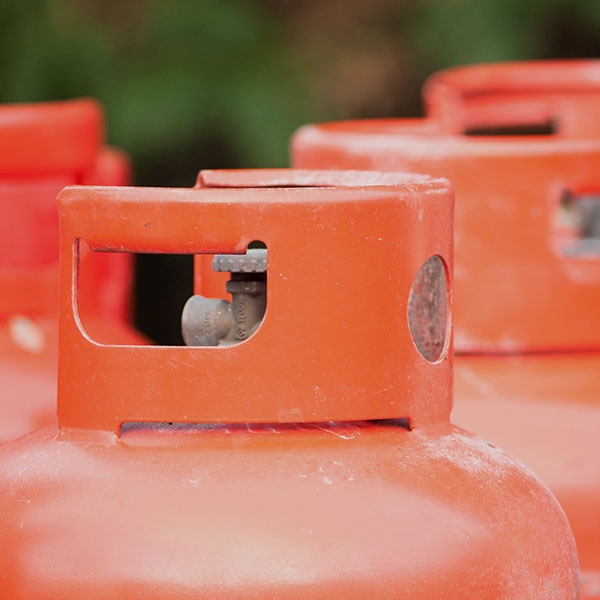
The main difference between mains gas and LPG central heating is that LPG is delivered by road and stored close to the property in a large fixed tank.
How does LPG central heating work?
LPG central heating is normally used in a ‘wet’ heating system. An LPG-fired boiler heats water which provides central heating and domestic hot water. Some boilers which have been designed for mains gas can be retrospectively converted to use LPG.
The price of LPG fluctuates fairly frequently but on average has shown to be slightly cheaper to buy than oil. However, the real savings will be influenced by the efficacy of the boiler and the quality of insulation in the property.
The storage tank can be located underground as they are usually an eye-sore As a fossil fuel the burning of LPG produces carbon dioxide and is therefore not an eco-friendly option.

Oil fuelled central heating is an efficient choice for off-grid domestic and commercial properties
Oil central heating is an ideal option for property located in remote and off-grid locations. The heating performance usually offers 90-98% heating efficiency. There is also a wide network of oil delivery options. The world-wide price of oil has risen considerably since 2022 and it's advisable to check the current prices with oil suppliers.
Oil boilers have a 20-year life-span (average)
Next day oil delivery usually available
Our own Service and Maintenance plan available
We provide our customers with an optional FIXED PRICE SERVICE PLAN with no excess service fee and no hidden extras.
Office Address
Off-Grid Heating Ltd.
6 Opulus Way
Monmouth
Wales
NP25 5UW
Tel:07896 760851
info@off-grid-heating.co.uk

© Off-Grid Heating Ltd.
All rights reserved
Company number 09138528